DGA
Parachute engineering for technical evaluation: performance assessment and evidence to support qualification decisions.

Physical testing and numerical qualification support for flexible wings, parachutes and recovery systems.
Support evaluation and qualification with measurements, numerical analysis and engineering interpretation.
Commission a physical test campaign, an instrumented experiment, a numerical performance assessment or a combined model–test study. We define the operating conditions, outputs and evidence needed for your decision.
For defence and aerospace recovery systems, that evidence also supplies performance inputs for trajectory analysis, guidance-system development and simulation environments.
Flight experience, appropriate test pilots
and instrumentation around one question.
Our team’s flight experience and specialist test-pilot contacts help connect observed behaviour with the mechanics. We coordinate the people and test approach appropriate to the product and campaign.
We prepare measurement campaigns to characterise geometry, loading and performance. Sensor selection, integration, calibration checks, synchronisation and data analysis are part of the engineering work.
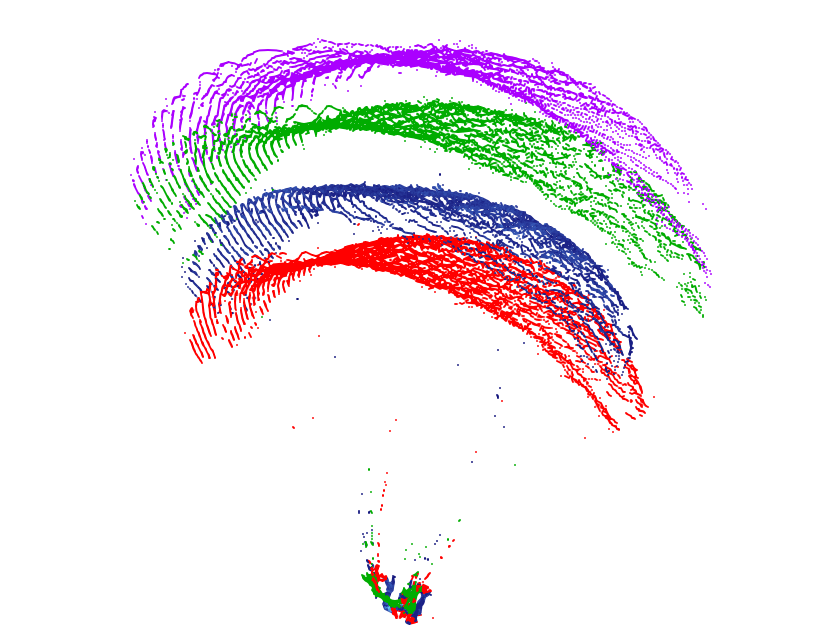
Flight-measured point clouds from four different wings, shown together to compare their flying geometries.
Each colour identifies a different wing, rather than a deformation state of the same canopy. LiDAR figure supplied by FAIR AERO.
Reconstruct the flying geometry and examine deformation against the numerical model.
Relate position and motion to the flight state and the observed response of the system.
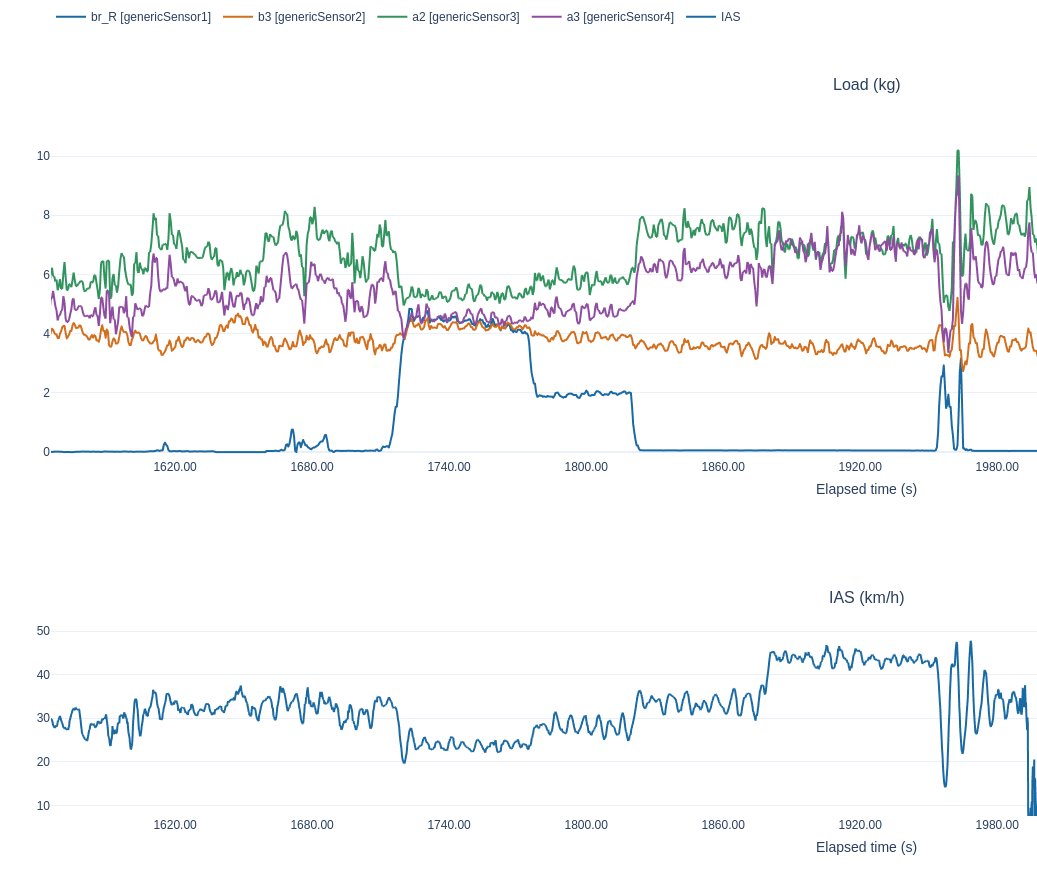
Measure forces in selected load paths and compare them with structural predictions.
Characterise local airflow speed and direction to support aerodynamic and performance analysis.
Typical outputs: a campaign plan, documented sensor configuration, synchronised datasets, performance analysis and model–test comparisons with the relevant uncertainties.
See the PHYSPAR flight-measurement story ↗Speak directly with the engineers who build the models and test the wings.
What would you like to do?