OUR PROPRIETARY SIMULATION PLATFORM

GENEPIHigh fidelity fluid structure interaction platform

Nonlinear aeroelastic analysis built around
the way textile wings are made.

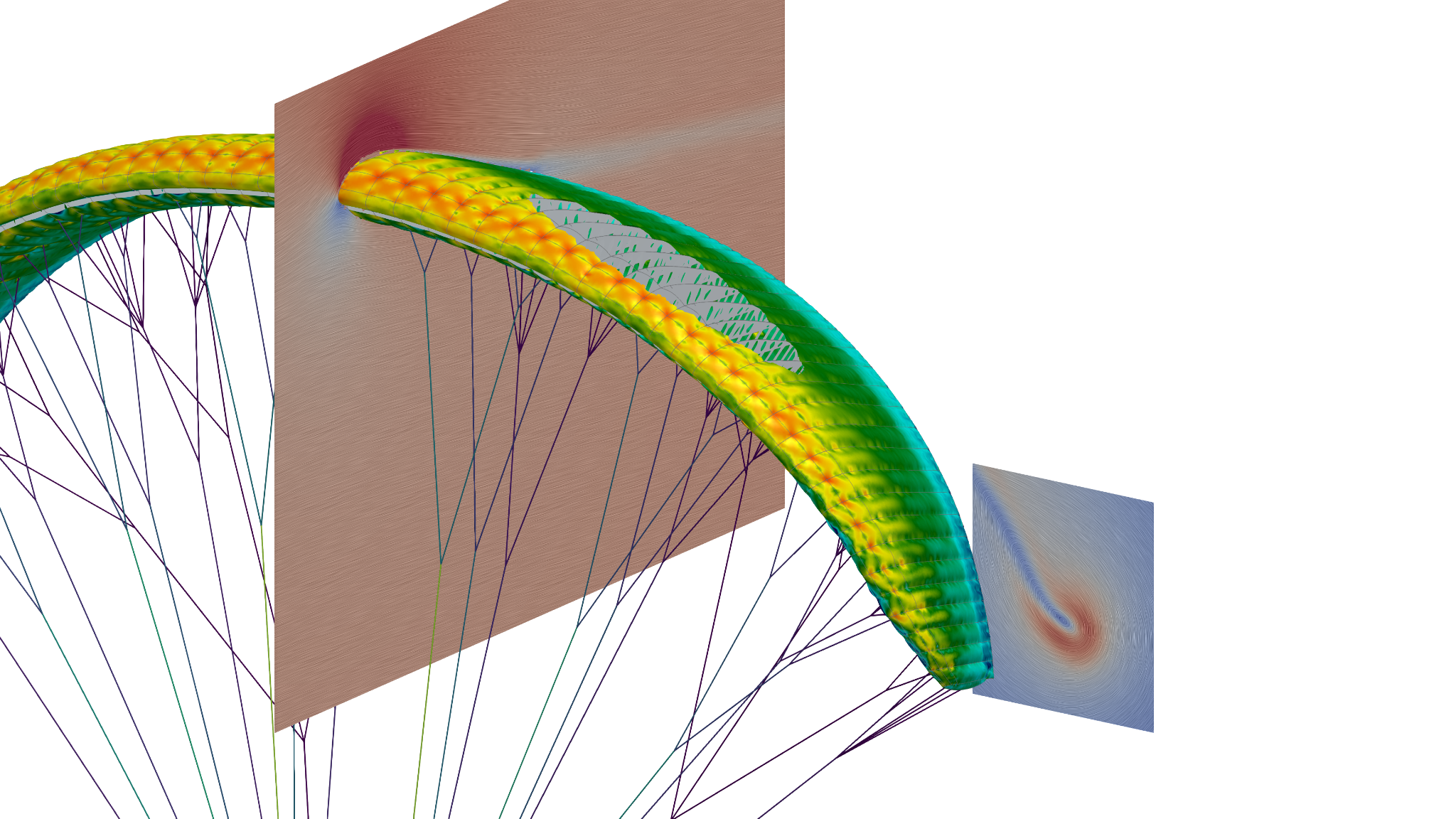
GENEPI ram-air wing simulation showing structural stresses and airflow sections at the centre and tip.
WORK WITH GENEPI

ENGINEERING TODAY.
DIRECT ACCESS TOMORROW.

Work directly with the engineers
who develop and use the platform.

AVAILABLE TODAY / ENGINEERING SERVICES

Your question.
Our engineers.

FAIR AERO engineers perform the studies using GENEPI. We define the scope with you, build the model, run the calculations and interpret the results against your requirements and reference data.

Discuss a first study ↗
ROADMAP OBJECTIVE / 2028

SaaS access.

Enable partners to launch their own calculations on FAIR AERO’s computing infrastructure.

ROADMAP OBJECTIVE / 2030

On your infrastructure.

Provide an executable so partners can run calculations on their own computing infrastructure.

Direct software access is a development objective. Target dates depend on funding, technical maturity and validation with partners.

THE MODELLING CHALLENGE

A non linear multi-physics problem

For a textile wing, the aerodynamic surface is an outcome of the loads acting on it.

GENEPI — GEneralized Non-linear aero-Elasticity of Paragliders and Inflatable wings — links the structural representation of a flexible wing to its aerodynamic loading. Our research focuses on making that coupled problem useful in an industrial design process.

Geometry, material directions, internal construction and suspension lines all influence the calculated flying shape. Model choice and the interpretation of results remain part of the engineering work.

A CONNECTED WORKFLOW

Simulate the wing
you manufacture.

Start from the production definition to carry construction choices into the numerical model.

STANDARD APPROACH

Start from a 3D CAD surface.

  1. Nominal 3D geometry
  2. Mesh generation
  3. Fluid–structure simulation

The model starts from the intended shape. The effects of panel cuts, material directions and assembly may be lost between manufacturing and simulation.

GENEPI / PRODUCTION-BASED APPROACH

Start from the production plans.

  1. 2D panels, materials and seams
  2. Numerical sewing & assembly
  3. Fluid–structure simulation

Reconstruct the assembled wing from its cutting patterns. Preserve material directions, seam connections and assembly tensions before applying aerodynamic loads.

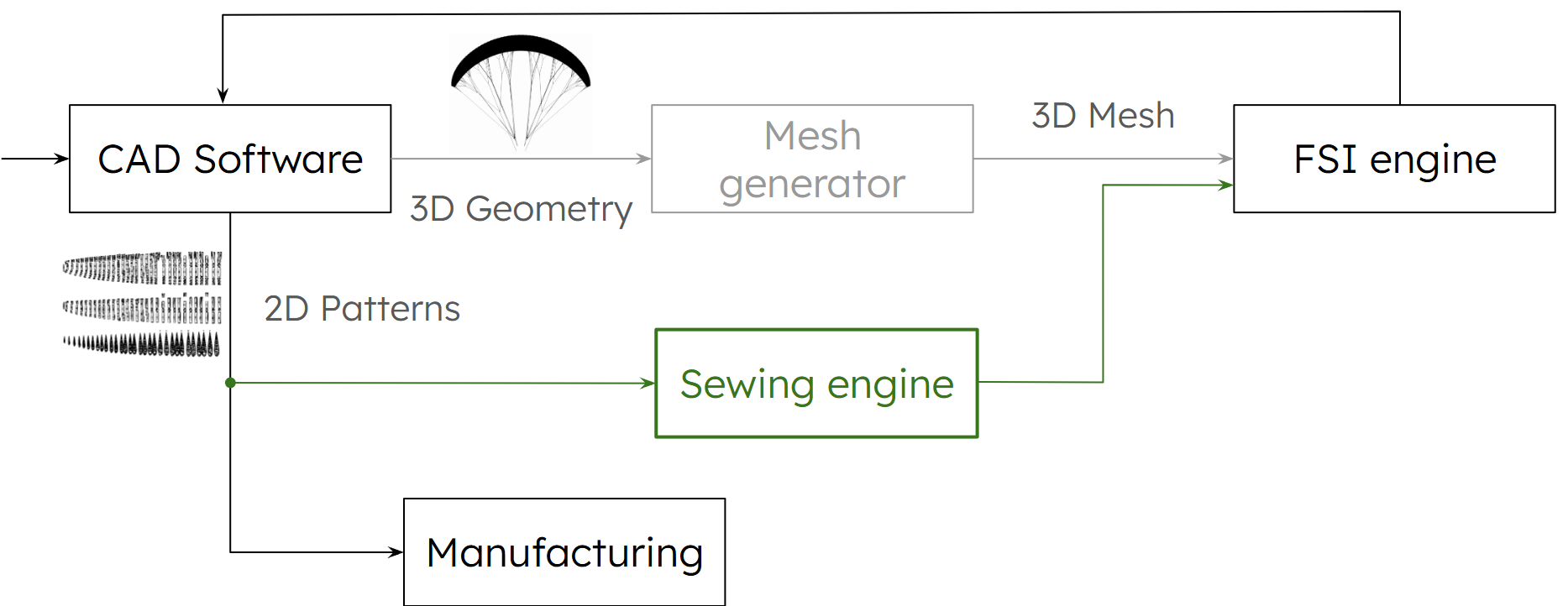
CAD software supplies nominal 3D geometry to a mesh generator, while 2D production patterns pass through a sewing engine to the FSI engine and also feed manufacturing.
One production definition connects the manufactured wing and the numerical model.
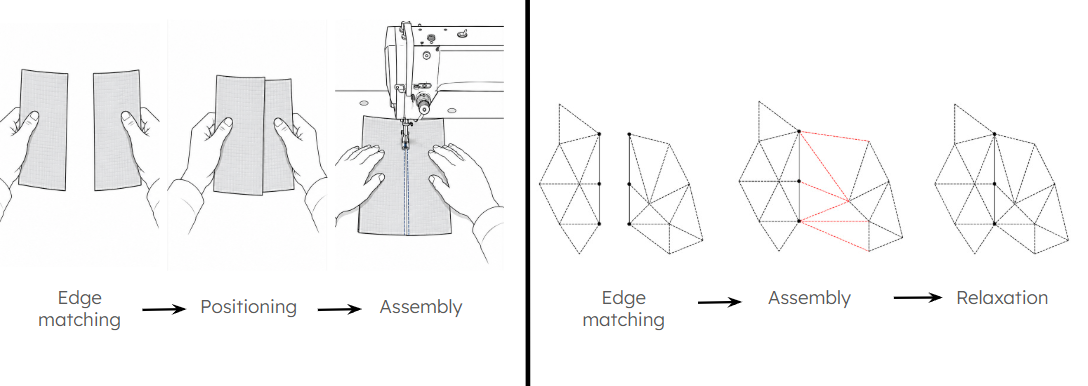
Physical sewing uses edge matching, positioning and assembly; numerical sewing follows edge matching, mesh assembly and relaxation.

Represent the assembly, not just the surface.

Numerical sewing follows the connections between flat panels, assembles their meshes and relaxes the structure into its sewn shape. Construction becomes part of the physics.

TECHNICAL SCOPE

THE RIGHT MODEL
FOR THE QUESTION.

Modelling detail has to serve the decision.
More computation is useful when it adds evidence.

Structural mechanics

Large deformations, anisotropic textile behaviour, suspension systems and internal architecture.

Manufacturing-aware geometry

Numerical sewing from 2D cutting patterns and seam topology, connecting production data with the assembled model. French patent application FR2600770, filed 20 January 2026.

Multi-fidelity aerodynamics

from potential flow based methods for pre-design to 3D RANS for fine tuning details

Engineering interpretation

Deformed geometry, aerodynamic behaviour and structural load distributions, assessed over selected operating conditions.

The modelling scope and validation requirements are defined for each study. Capabilities under research are distinguished from the methods selected for a particular deliverable.

Build numerical evidence for evaluation & qualification ↗
EVIDENCE & OPEN QUESTIONS

BUILT THROUGH
RESEARCH.

Explore the published methods, numerical sewing workflow and multi-fidelity approach behind our work.

Browse publications
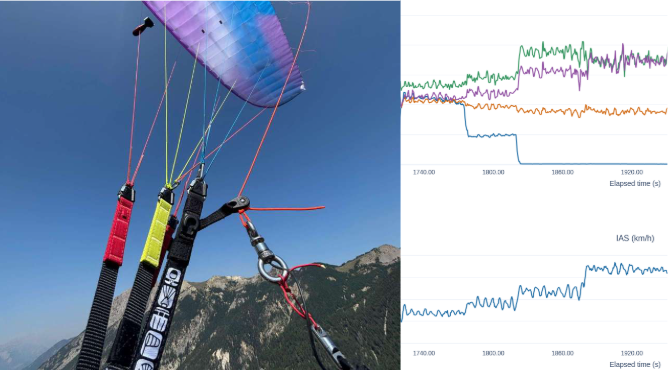
Paraglider flight instrumentation beside load and airspeed measurements.
Flight instrumentation and measured loads and airspeed, connecting simulation with testing.
START A CONVERSATION

LET’S TALK
ENGINEERING.

Speak directly with the engineers who build the models and test the wings.

What would you like to do?

Develop an innovative productImprove an existing wingPlan a measurement campaignBuild a research project