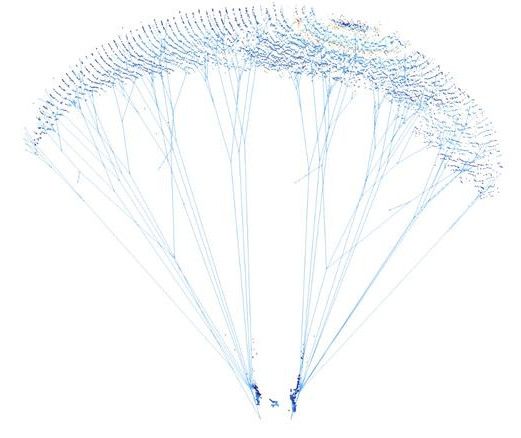
Take a look at this example of Fluid–Structure Interaction (FSI) simulation of a ram-air parachute, performed with our GENEPI software.
The simulation illustrates how a parachute evolves from its initial design geometry towards an aeroelastic equilibrium, as aerodynamic forces interact with the flexible canopy and suspension lines.
Once stable trim is reached, we apply a brake input and change the airflow conditions. The system then evolves towards a new stabilised flight configuration. Repeating these analyses across operating conditions supports flight-envelope assessment and provides numerical evidence for qualification.
What can you see in the video?
- Suspension lines: colour-coded according to their tension.
- Canopy: structural deformation and von Mises stress distribution.
- Airflow: streamlines and velocity fields around the parachute.
What does this mean for parachute manufacturers?
Our simulation capabilities allow manufacturers to explore design modifications and predict their effects on in-flight geometry, aerodynamic performance and structural loads before manufacturing a physical prototype.
This opens up three major opportunities:
- Reduce development costs — identify potential design issues early and reduce the number of physical prototypes required.
- Accelerate time to market — evaluate more design alternatives and shorten design–test–refine cycles.
- Improve performance — optimise canopy geometry, suspension-line configurations and material choices to achieve better aerodynamic characteristics.
At FAIR AERO, we develop advanced numerical tools to help manufacturers connect design experience with simulation-supported engineering.
Explore the related work