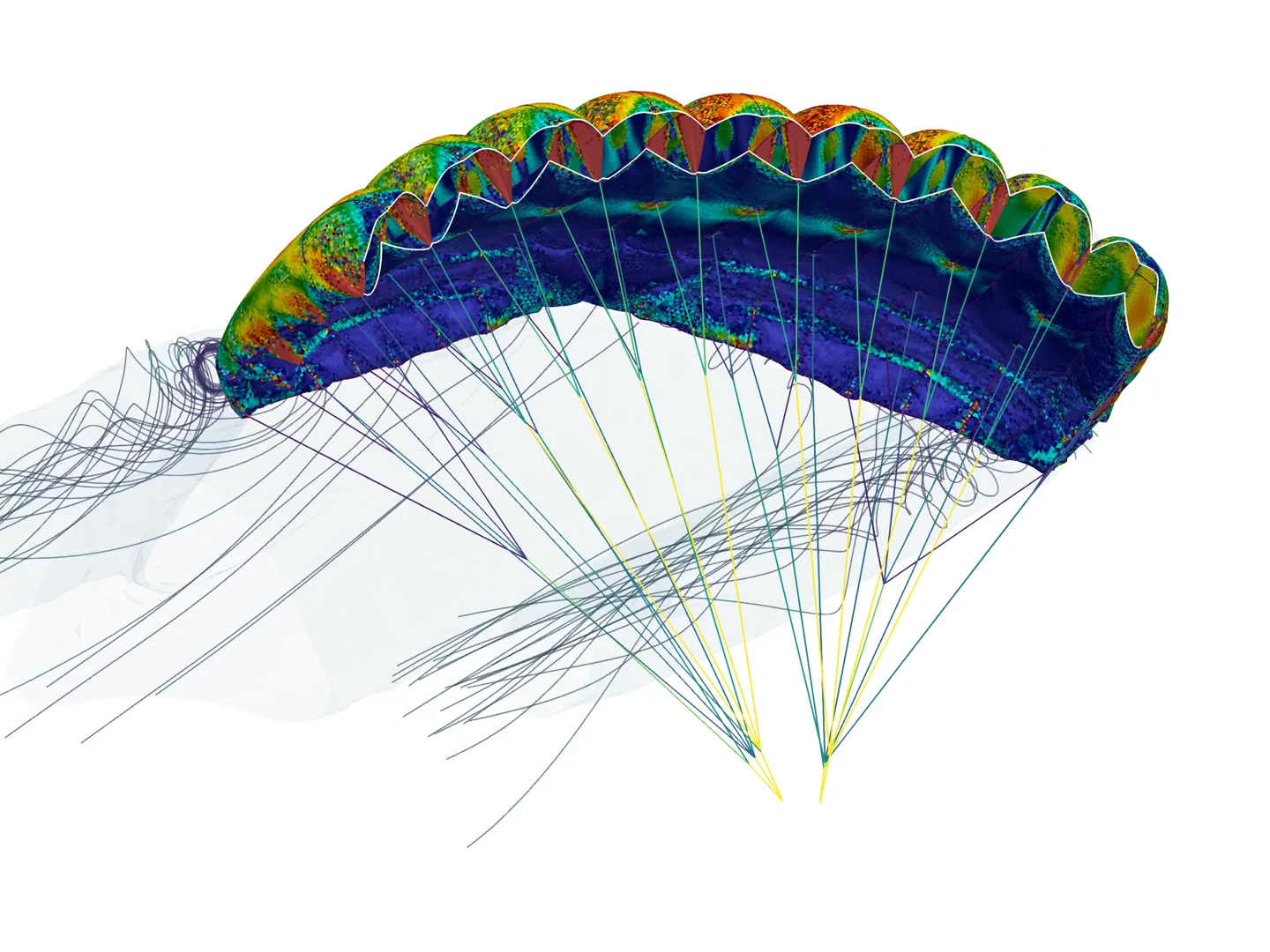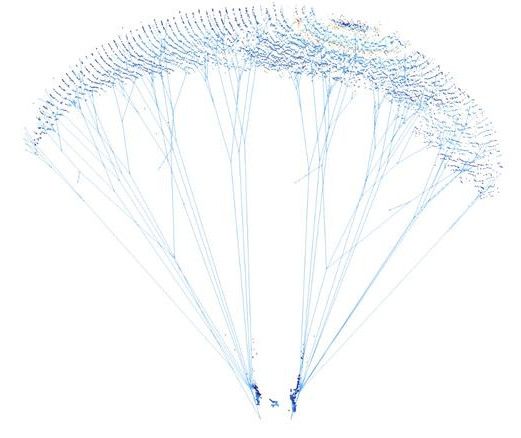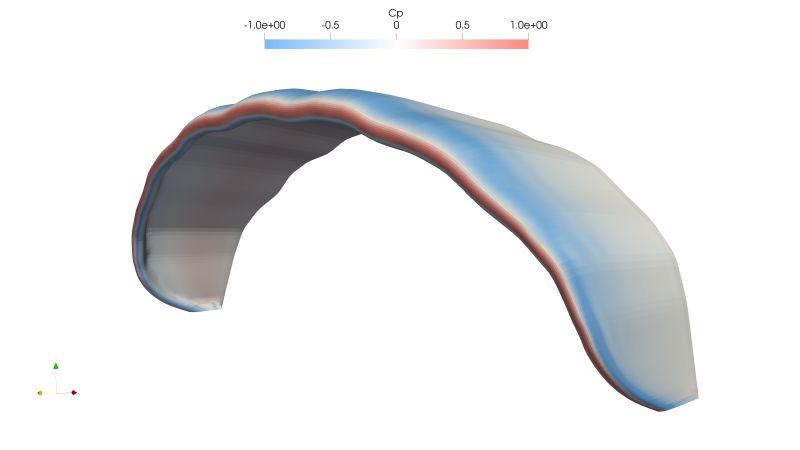
Accurate validation against experimental data is the best way to build trust in an aerodynamic model, especially when we want a method that is fast enough for design iteration, yet still predictive across operating points.
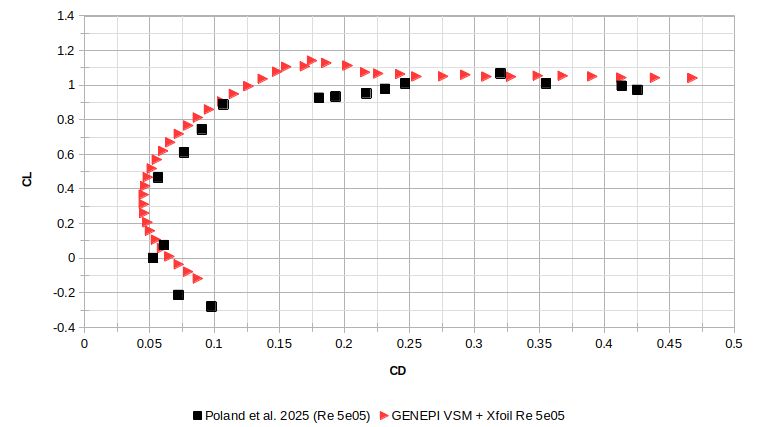
Here is our validation of an Inflatable Leading Edge (ILE) kite using the wind-tunnel dataset from Poland et al. 2025 (https://lnkd.in/dUBcWvYt)
On the modeling side, we use the Vortex Step Method (VSM) and feed it with XFoil-based 2D polars as aerodynamic input. The VSM implementation is based on Airborne Wind Energy Research Group's / TU Delft | Aerospace Engineering open source code (https://lnkd.in/dmTb_xcY) interfaced within our GENEPI software.
The computed aerodynamic loads show excellent agreement with the experimental measurements, especially at operating lift coefficients. This highlights that a low-order model, when paired with consistent geometry and well-prepared polar data, can achieve high accuracy at a fraction of the computational cost of higher-fidelity CFD. Special thanks to Jelle Poland for the wind tunnel data and for helping us with this validation case !
This update was also shared on the FAIR aero LinkedIn page.
Visit our LinkedIn page